



A proof of concept, or PoC for short, is an early practical test used to check whether an idea is technically and organisationally viable. It is not about a finished product, but about limited proof that an approach basically works under realistic conditions.
Anyone searching for “proof of concept” usually wants to understand quickly:
- what a PoC actually is,
- what it is used for,
- how it differs from a prototype and a pilot,
- and when the effort is worthwhile.
For founders, specialist departments and project leads, a PoC is above all a way to spot risks, false assumptions and unnecessary investment at an early stage. This article explains the term, use cases, process, typical outcomes, limitations and the key questions to help you prepare for a decision.
What a proof of concept means
A proof of concept is a limited feasibility check for a specific question within a planned project. At its core, it is about testing a critical assumption: can an interface be connected, will data be processed reliably, or can an AI task be solved in a way that makes practical business sense? An interface is a standardised connection through which software exchanges data.
The distinction is important: a PoC replaces neither full planning nor later product development. It answers one core question in a targeted way, not the entire project.
It often helps to distinguish it from similar terms:
- A prototype usually shows the interaction concept and user interface.
- A PoC mainly tests technical or business viability.
- A pilot project is usually closer to real operation and is tested with real users or in real processes.
There is a simple reason why the term comes up so often in software projects: digital projects often involve uncertainty. This includes data quality, process logic, system limits, integration into existing environments, or questions about later operation in the cloud. If you would like to understand this context better, the article on cloud computing infrastructure may help.
Typical goals of a PoC include, for example:
- combining data from several sources
- mapping a business process digitally
- extending an existing system
- assessing functions such as document extraction or knowledge search
When a PoC makes sense and when it does not

A PoC is particularly useful when the business idea is already clear, but one central assumption is still not robust enough to support a larger investment decision. This is exactly where a targeted feasibility check helps: it tests whether a critical point stands up before more scope, budget and coordination go into the project.
Typical use cases include, for example:
- a new product idea
- replacing existing software
- extending a long-established system
- connecting third-party applications
For decision-makers, this is particularly useful because a PoC makes risks visible earlier. That improves the basis for budget, prioritisation and delivery decisions. It is also helpful for public-sector clients and agencies: early proof sharpens requirements and reduces misunderstandings before the actual implementation begins.
It often involves questions like these:
- Is the data quality good enough?
- Are external systems reliably available?
- Do user roles and processes fit together?
- Which security requirements are relevant?
- Can the approach be scaled later?
- Will the function really deliver business value?
A PoC is not always necessary. If the task is already well understood from both a business and technical perspective and no critical assumption remains unresolved, you can move straight into planning and development. A realistic view is also important: a PoC clarifies specific core questions, but not automatically the whole project. If requirements change later, it also helps to look at changes during the course of a project.
How a proof of concept works in practice
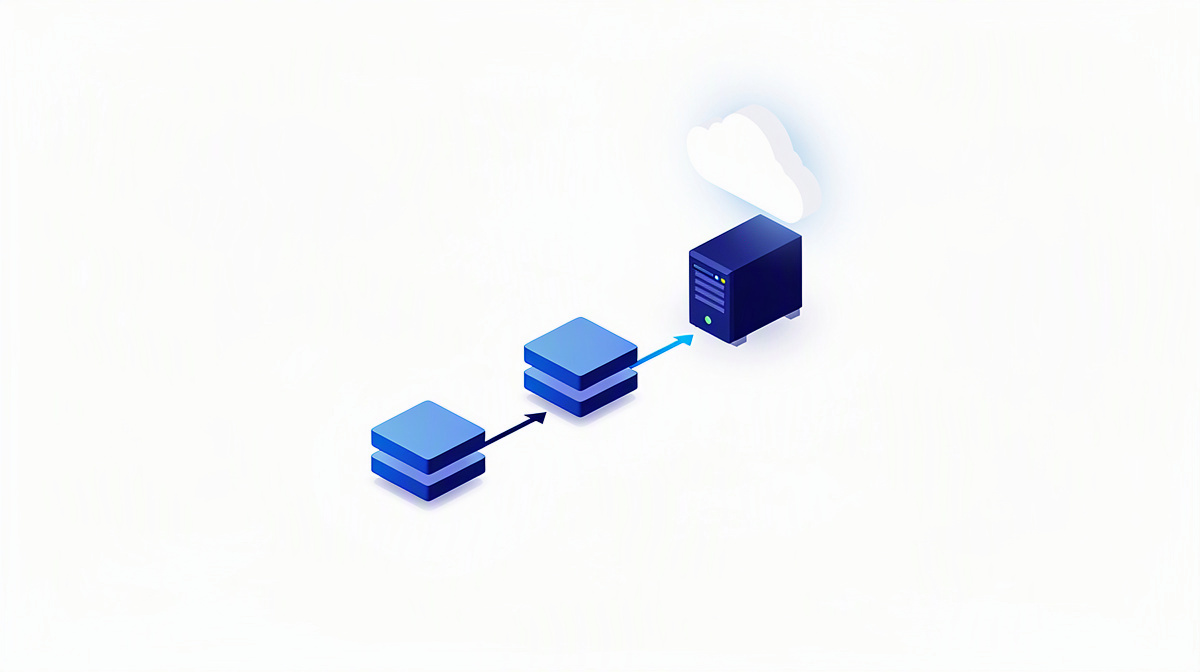
At the start, the focus is not the solution but the question: which assumption actually needs to be proved or disproved? The more clearly this point is defined, the more useful the PoC will be for decision-making.
It is just as important to keep the scope deliberately small. A proof of concept should not try to test too many sub-problems at the same time. Only then can the results be interpreted clearly and lead to a sound next decision.
In practice, a PoC usually follows a clear set of steps:
- understand the starting point
- define the target scenario for the test
- set success criteria
- define the test setup
- evaluate the results
- derive the next steps
These success criteria should be concrete in advance. What matters, for example, may be whether data is available in sufficient quality, whether a process can be mapped correctly from a business perspective, or whether a function appears genuinely useful in day-to-day work.
A PoC becomes truly meaningful above all when it is based on realistic processes and relevant data, as far as that is possible at this early stage. This is especially important for AI functions, for example where documents are to be extracted, company knowledge searched, or assistants used for support.
These kinds of feasibility questions arise in very different projects, for example in a municipal web platform, a CRM, or the connection between Azure DevOps and planning software. If you would like to understand the context of similar projects better, you can find it under ballmüller solutions services.
CI/CD means that changes are checked automatically and deployed in a controlled way. This supports reliable further development later on, but it is not the actual goal of a PoC. For an initial assessment of your project, the cost calculator, the project check, reference projects and client testimonials and a no-obligation initial consultation are helpful.
What results you can expect from a PoC
A proof of concept does not deliver a complete solution. Its real value lies in usable insights that make your next decision much better informed.
Typical outcomes include, for example:
- assumptions confirmed or disproved
- risks that still remain
- a clearer target picture
- more precise requirements
- dependencies that have become visible
This clarity is particularly important for business teams and IT. After a PoC, it is usually easier to say what is really needed, which conditions must be met, and what should deliberately not be part of the project. That reduces misunderstandings in the next steps.
This is also relevant for later budget decisions. When key uncertainties are reduced, effort, priorities and the order of implementation can be assessed more reliably. A PoC does not replace these decisions, but it improves the basis for them.
Another important point: even a negative result can be useful. If it becomes clear early on that an approach will not work under the given conditions, you avoid later detours.
This often results in tangible documents, such as:
- a short record of the question being examined
- a description of the test setup
- an evaluation of the results
- a recommendation for the next steps
In addition, a PoC often shows which external systems, data sources or organisational decisions will matter for the overall project. If this later leads to changes in scope, the topic of change requests becomes relevant in the further course of the project.
What to consider when preparing
To prepare well, it helps to write down the core question of the proof of concept in a single sentence. The more precisely this question is formulated, the more clearly you will be able to assess later whether the test has really helped.
It is also important to bring in the business perspective at an early stage. What matters is not only whether something appears technically feasible, but also whether it creates clear value in day-to-day work.
Data and responsibilities should also be clarified from the outset. This includes above all:
- which information is available for the test
- how reliable that data is
- who makes business decisions
- who can answer follow-up questions quickly
Security, data protection and legal issues may also already play a role at this stage. However, the PoC itself is not legal proof. If such topics are relevant, they should be reviewed where necessary with a data protection officer or a solicitor.
It is also helpful to look at how the solution might later fit into its wider context. A well-prepared PoC already considers at an early stage how the potential solution could fit into existing processes, user roles and systems.
For an initial sense of the framework of a project, the cost calculator and the overview of services relating to app, web and database development, hosting and operations are useful.
Frequently asked questions about proof of concept
What is the difference between a proof of concept, a prototype and a pilot project?
A proof of concept tests whether a specific assumption is viable. A prototype, by contrast, often shows what a solution might look like or how it could be used. A pilot project goes one step further: it works much closer to real operation with real users or real processes.
In short:
- PoC = feasibility of a core question
- Prototype = picture of interaction and concept
- Pilot = test in practical use
How large should a proof of concept be?
As small as possible and as large as necessary. A PoC is most useful when it answers exactly one critical question. Trying to test too many open points at once makes the results harder to assess.
A sensible scope is usually reached when it remains clear:
- which assumption is being tested
- which data or processes are relevant for it
- how you will recognise a useful result
Is a proof of concept already the first version of the later software?
Generally not. A proof of concept is not a finished product launch, nor is it automatically the first expansion stage of the later application. Its main purpose is to generate insights.
Even so, a PoC can provide important foundations for further planning. The key is not to confuse it with a solution that is already ready for production.
Can a PoC also make sense for AI functions?
Yes, especially there a PoC is often useful. With AI functions, the central question is often not only whether something works technically, but whether the results are genuinely useful in day-to-day work.
This applies, for example, to:
- extracting information from documents
- searching company knowledge
- support assistants
ballmüller solutions uses Azure OpenAI for this in the Microsoft Cloud.
What do I need to start a proof of concept?
To get started, a few clear basics are usually enough. Particularly helpful are:
- a clearly formulated core question
- a business contact person
- available sample data or typical use cases
- a shared understanding of what counts as success
If it is also clarified early on who makes decisions and which conditions matter, the PoC becomes far more valuable for further planning.
Approaching a proof of concept with the right implementation partner
For decision-makers, the most important thing when choosing a partner is that they understand the business goals, document results clearly and keep a small feasibility test clearly separate from later product development.
It is also helpful to have an approach in which planning and development work closely together. That way, not only can the core question of the PoC be tested properly, but future development can also be considered early on.
ballmüller solutions has been developing bespoke software with Microsoft .NET, databases, interfaces and operations in Azure for more than ten years, and has been working according to Clean Code Development since 2022.
If you would like to discuss an idea, you can request a no-obligation 30-minute initial consultation via Microsoft Teams.
