



“Commissioning software development” usually becomes relevant when standard software only partly covers your processes, media discontinuities remain, or existing systems are reaching their limits. The starting point should not be technology, but the question of which problem needs to be solved, who will use the software, and which workflows should become simpler, faster or more transparent. For managing directors and specialist departments, this is above all a matter of weighing things up: is a standard solution with customisations enough, or will a bespoke solution deliver greater benefit? This article sets out a practical path from the initial idea through to operation and helps you avoid typical wrong decisions at an early stage.
When it makes sense to commission software development
Commissioning software development makes sense above all when your workflows are so specific that standard software can only represent them by way of workarounds. This also applies when several existing systems need to work together, or when a particular process that is important to your business needs digital support.
Standard software is often the simpler route when requirements are largely in line with the market and your own process can sensibly be adapted to the solution. Between the two, there are hybrid models: a standard solution as the basis, with a bespoke extension for the workflows that are truly distinctive.
Typical reasons include:
- replacing a legacy application that has evolved over time
- digitising previously manual processes
- building a portal
- developing an app
- extending an existing system
The benefit does not come only from new functions. It is often also about better data quality, less duplicate maintenance and clearer responsibilities. Interfaces are connections between systems so that data can be exchanged automatically instead of being transferred manually. A database is the structured storage location in which an application’s information is managed reliably.
Web applications, apps, databases, interfaces and operation in the cloud are different building blocks that should be planned together. The services provide an overview of possible implementation building blocks. If several systems are to exchange data, the article on planning synchronisation between processes and systems is also helpful.
Before you start: clarify goals, users and requirements
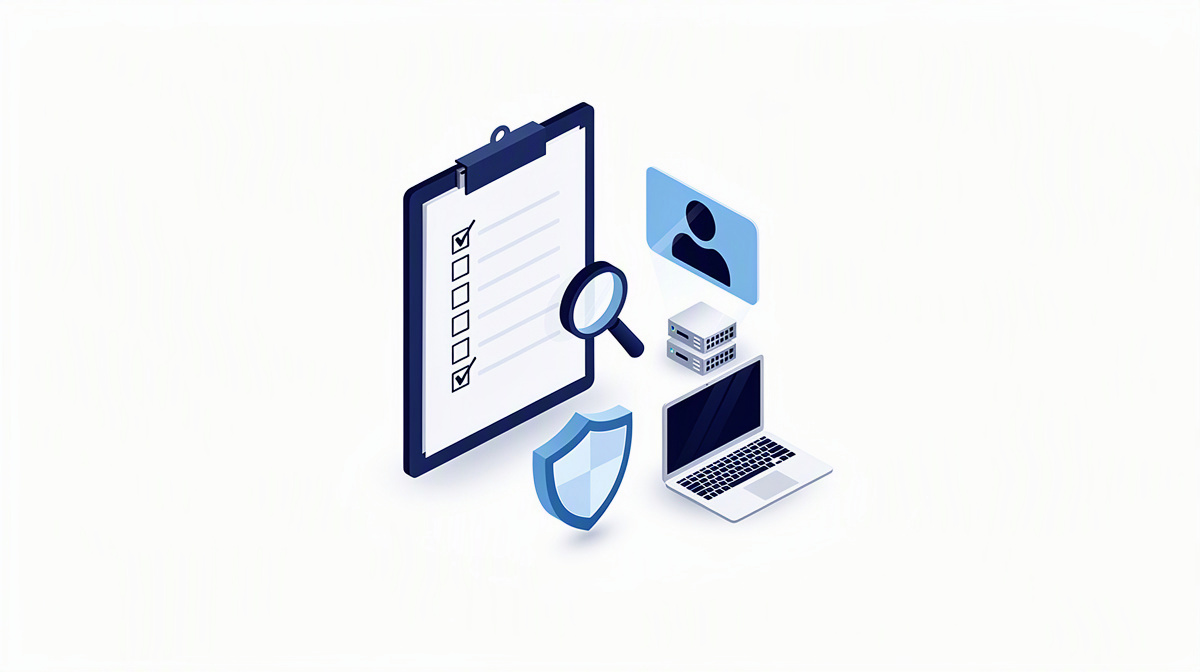
Before commissioning software development, you should sharpen the target picture: what should be measurably better after implementation than it is today? For example, shorter turnaround times, fewer manual transfers, a consistent data set, or greater transparency over processing status. This description of objectives helps focus enquiries and align later decisions with the actual benefit.
Describe requirements as far as possible from the users’ perspective. More helpful than a pure list of functions is the question of what a person needs to accomplish in their day-to-day work, which information they need for that, and where obstacles arise today.
Name the roles involved at an early stage:
- specialist department
- IT
- project leads
- future users
- external partners, where applicable
This makes it clear who supplies requirements, who knows the technical constraints, and who has to make decisions.
It is also sensible to document the existing workflows briefly: where is data created, who processes it further, where are there approvals, waiting times or media discontinuities? This overview in particular often already shows which points are essential for the start and what can be postponed to a later development stage.
A requirements specification describes the business requirements from the client’s perspective. It does not have to be perfect, but it often makes quotations easier to compare. If you do not yet have one, a structured description by email or in a workshop is also enough as a basis. You will find practical guidance in the article on what should be included in the enquiry. If material already exists, an initial project profile can be created from it via the Project Check.
Integrations are also important: if data from ERP, CRM, Microsoft 365 or other systems is to be included, this should be stated from the outset.
How a software project typically runs
When you commission software development, a project usually runs in five steps: getting to know each other, concept and design, development, quality assurance and go-live, followed by support and further development.
The process starts with an initial conversation. Requirements, expectations and a rough estimate of effort are discussed so that feasibility and the overall framework can be assessed realistically. For initial guidance on the likely scale, the cost calculator can also help; if you would prefer to discuss your project directly, an initial no-obligation consultation is a good option.
Concept and design then follow. The requirements are turned into an implementable plan with structure, user logic and a cost estimate. It is often sensible to present individual workflows first as an early preview in a prototype. A prototype is a simplified preview of operation or process that allows assumptions to be tested before full development begins. The functional specification as the next stage also shows how requirements become a robust plan.
During development, regular coordination is important. This allows decisions to be made promptly and misunderstandings to be recognised early.
Before go-live, functions are tested systematically. Automated tests are repeatable checks that make typical errors visible early on. CI/CD means that changes are built, tested and deployed in a controlled process so that releases remain traceable.
For go-live itself, data migration, access and operational processes must be prepared so that the launch can proceed in an orderly way. After that, the work usually continues with support and further development. Why this stage matters is also shown by looking at technical debt in software.
Technical decisions that matter for decision-makers
When you commission software development, you do not need to assess every technology in detail. What matters is understanding the consequences of key architectural decisions. They influence how well a solution can be used, extended and operated.
Web applications run in the browser. They are often suitable when many users need to work without local installation and access must be possible from different workplaces.
Apps for smartphones or tablets are particularly useful when device functions need to be used, offline use is important, or very specific mobile interaction is required. The article on when a native app makes more sense shows when that may be the better choice.
.NET is a widely used Microsoft technology for developing web applications, apps and backend systems. Backend systems are the technical components in the background that process data, execute rules and provide interfaces. Modern .NET development can be implemented, among other things, with C#, ASP.NET Core and Blazor.
SQL databases are relational databases in which structured information is stored and queried consistently. Whether a cloud database makes sense depends in part on usage, integrations and operations.
Microsoft Azure is Microsoft’s cloud, in which applications, databases and supplementary services can be operated. Cloud operation touches on questions of scalability, availability, security and responsibilities. These points should be discussed before the project starts. More on this can be found in operating in the cloud and the reference projects and client feedback.
How to choose a suitable development partner

If you commission software development, you should not judge a proposal only by the range of functions described. Collaboration, clarity in discussions and an approach that suits your project are just as important.
Useful questions for decision-makers include, for example:
- Who is responsible for concept and development?
- How is coordination handled during the project?
- Who is responsible for operations?
- How is quality assured?
- What happens after go-live in support and further development?
It helps when concept, design and development work closely together. That way, business requirements, usability and technical implementation fit together better instead of emerging separately one after the other.
For some clients, it is also relevant whether implementation takes place entirely in Germany and whether discreet development support for agencies or companies is available if needed.
One example of a suitable project type is a web platform on which municipalities manage their sewer network, its condition and planned measures in one place. This shows how a bespoke solution can bring together specialist processes, data and responsibilities. Other project types might include a CRM system for an insurance broker or an extension that connects Azure DevOps with planning software.
Look at references and similar projects, without transferring them one-to-one to your own project. Reference projects provide an overview.
Frequently asked questions if you want to commission software development
When is it worth commissioning software development instead of introducing standard software?
It is worthwhile above all when your workflows are so specialised in business terms that a standard solution only fits by way of workarounds. Another typical case is when several existing systems need to work together and the real benefit only arises through coordinated data flows.
Standard software is often suitable when your needs are largely in line with the market and you can adapt processes to the solution without major disadvantage. Here too, there are sensible hybrid models: a standard application for the core and a bespoke addition for the genuinely special parts.
What information should I prepare before making an enquiry to a software development provider?
Above all, it helps to prepare the points that classify your project in business terms:
- which problem needs to be solved
- who will use the software
- which workflows exist today
- which systems need to be included
- what is indispensable for the start
- which goals should be achieved after implementation
If a requirements specification, process sketches or screen examples already exist, that makes the assessment easier. But a structured description is also enough, as long as it makes clear what the project is about in business terms.
How does a software project typically run from the initial consultation to go-live?
It usually starts with a discussion to assess requirements, expectations and the overall framework. This is followed by a business and design concept, implementation, systematic testing and preparation for launch.
What matters is that decisions are not left until the very end. Regular coordination helps clarify open points early and review the project status together.
What should I pay particular attention to when selecting a development partner?
Pay attention to whether the other party understands your business domain and explains clearly how requirements become a viable solution. Clear responsibilities, a transparent approach and a plan for quality assurance, operations and further development are equally important.
How can I estimate the rough effort for my software project without already knowing all the details?
For an initial assessment, not every detail has to be fixed. A roughly described scope with users, core workflows, involved systems and priorities is usually enough. From that, an initial sense of scale can be derived.
The more clearly defined what belongs in the first development stage is, the more reliable this assessment becomes. Unclear or very open points should be identified as assumptions.
Conclusion: from the project idea to the next sensible step
If you want to commission software development, a good decision usually does not begin with the technology. What matters first is which problem needs to be solved and which process should then work more simply, more clearly or more seamlessly.
A clean start saves a great deal of coordination effort later. Above all, this includes:
- clear goals
- understandable priorities
- named systems involved
- a realistic first development stage
You should only assess the effort once the scope has been described in broad terms. The cost calculator is suitable for an initial estimate. If a description or requirements specification already exists, the Project Check is the obvious next step.
If you would like to discuss your project directly, you can request an initial 30-minute no-obligation consultation via Microsoft Teams with Görkem Ballmüller on the contact page. ballmüller solutions is a Berlin-based software provider for bespoke software with Microsoft .NET, a Microsoft Cloud Solution Provider, with concept and development delivered by its own developers and designers, 100 per cent in Germany.